


Dufourbit Warning: FCA Says the Firm Is Unauthorised—7 Checks Before You Pay
The FCA warned about Dufourbit on 19 August 2026. Check the named domain, contact details, missing protections and seven steps before making any payment.
Original

简体中文
繁體中文
English
Pусский
日本語
ภาษาไทย
Tiếng Việt
Bahasa Indonesia
Español
हिन्दी
Filippiiniläinen
Français
Deutsch
Português
Türkçe
한국어
العربية
اردو




Abstract:An in-depth look at a scalable fraud method in the forex sector, built on reusing the same website structure under different brand names.

In the global forex industry, new trading websites appear almost daily. Many present themselves as established brokers, offering familiar products such as forex, CFDs, metals, and cryptocurrencies. At first glance, these platforms often look professional, complete with trading dashboards, market tables, and well-structured product pages.
However, a closer comparison of several recently identified websites reveals a recurring and highly concerning pattern: the use of a single, reusable website template combined with borrowed broker logos and look-alike domain names.
Rather than building independent brokerage platforms, operators are deploying the same front-end structure again and again, swapping only the branding elements to create the illusion of legitimacy.
 Contents
An examination of the following domains highlights this pattern clearly:
Although each site claims to represent a different broker, their page layout, wording, and functional structure are almost identical.
Key similarities include:
The only meaningful differences are the logo displayed at the top of the page and the domain name, which is designed to resemble that of a well-known, regulated broker.
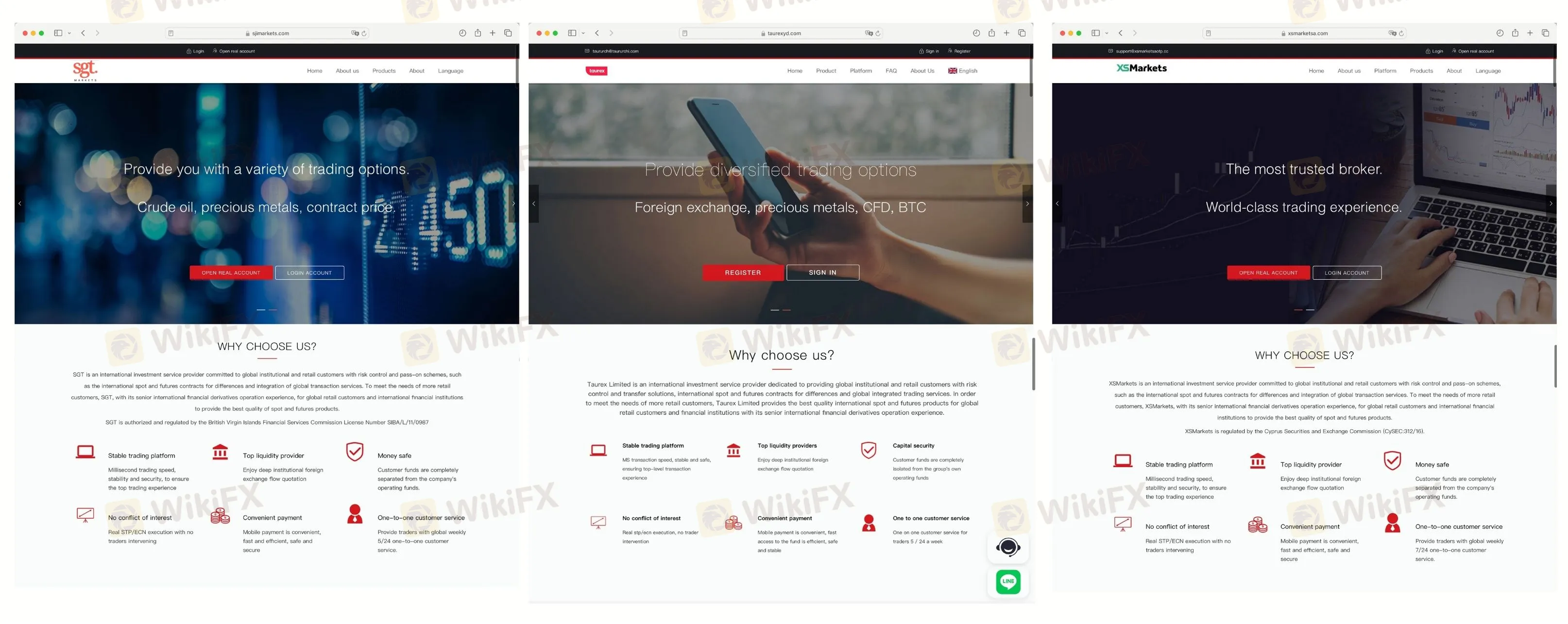
Importantly, these sites are not attempting to faithfully replicate the official websites of SGT Markets, Taurex, or XSMarkets.
Instead, they rely on a generic, widely reused forex website template that has appeared across many unlicensed platforms. This template already contains all the elements a retail trader expects to see — platform descriptions, product lists, account opening flows, and market tables.
Once the template is in place, the process becomes extremely simple:
Because the same structure can be reused endlessly, this method allows fraudulent operators to launch multiple “broker” brands quickly and at very low cost.
The forex industry is particularly vulnerable to this approach.
Retail traders are accustomed to seeing similar website structures across legitimate brokers, as many regulated firms also rely on standardized design patterns and white-label solutions. This makes it harder for users to distinguish between a licensed broker and a cloned front-end at a glance.
For scammers, this creates a powerful advantage:
The goal is not longevity, but speed — acquiring users before complaints or regulatory action catch up.
What makes this tactic especially dangerous is its scalability.
Once one site is flagged or taken down, the same operators can simply:
This cycle has already been documented repeatedly in the forex sector, where clusters of nearly identical platforms emerge within short timeframes, often targeting different regions simultaneously.
Individually, a professional-looking website, a familiar logo, or a forex product list may not raise immediate suspicion. But when multiple platforms share:
the risk becomes systemic rather than isolated.
In such cases, pattern recognition — comparing structure, text, and deployment timelines across platforms — becomes far more effective than evaluating any single site in isolation.
The cases of sjimarkets.com, taurexyd.com, and xsmarketsa.com illustrate a broader issue facing the forex industry: template-driven broker impersonation.
This is not about sophisticated one-off scams. It is about an industrialized process designed for rapid deployment, easy replacement, and minimal upfront cost.
As long as professional-looking templates and recognizable broker brands can be combined so easily, surface-level appearance will remain an unreliable indicator of legitimacy. Understanding how these platforms are built — not just how they look — is increasingly essential for anyone navigating todays online forex landscape.

Disclaimer:
The views in this article only represent the author's personal views, and do not constitute investment advice on this platform. This platform does not guarantee the accuracy, completeness and timeliness of the information in the article, and will not be liable for any loss caused by the use of or reliance on the information in the article.
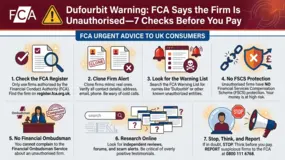
The FCA warned about Dufourbit on 19 August 2026. Check the named domain, contact details, missing protections and seven steps before making any payment.
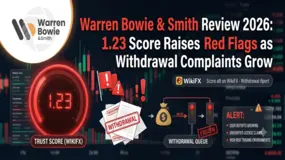
Was your trading experience with Warren Bowie & Smith, a Mauritius-based brokerage entity, not so fruitful? Did the broker tempt you into trading by giving you assurances of profits that never appeared on the Warren Bowie & Smith login dashboard? Did you struggle to withdraw profits from the trading platform? Upon your withdrawal request, did the broker official make you invest further? This Warren Bowie & Smith review examines serious trading allegations against the broker. Additionally, we have provided the broker’s regulatory status.
Angel One, an India-based brokerage entity, constantly receives allegations from users online. Users are complaining about withheld funds, poor customer support service, undesired trade execution orders, etc. In this Angel One review, let’s quickly go through these complaints, understand its regulatory framework and pay attention to the product portfolio.
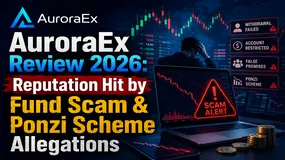
AuroraEx, a United States-based multi-asset brokerage entity, is facing serious user allegations over how it handles deposited funds. Many users have accused the broker of failing to meet its payment obligations. Some have questioned the broker over possible trade-related foul play, while others have alleged that it scammed them through a Ponzi operation. This AuroraEx review examines these user-reported allegations and provides an overview of the broker’s regulatory status.
WikiFXWikiFXWikiFXWikiFXWikiFXWikiFXWikiFXWikiFXWikiFXWikiFX