


Dufourbit Warning: FCA Says the Firm Is Unauthorised—7 Checks Before You Pay
The FCA warned about Dufourbit on 19 August 2026. Check the named domain, contact details, missing protections and seven steps before making any payment.
Original

简体中文
繁體中文
English
Pусский
日本語
ภาษาไทย
Tiếng Việt
Bahasa Indonesia
Español
हिन्दी
Filippiiniläinen
Français
Deutsch
Português
Türkçe
한국어
العربية
اردو




Abstract:Growing warnings surround HTFX after losing its European licenses and being flagged by WikiFX as a Ponzi-style platform, with repeated reports of withdrawal problems.
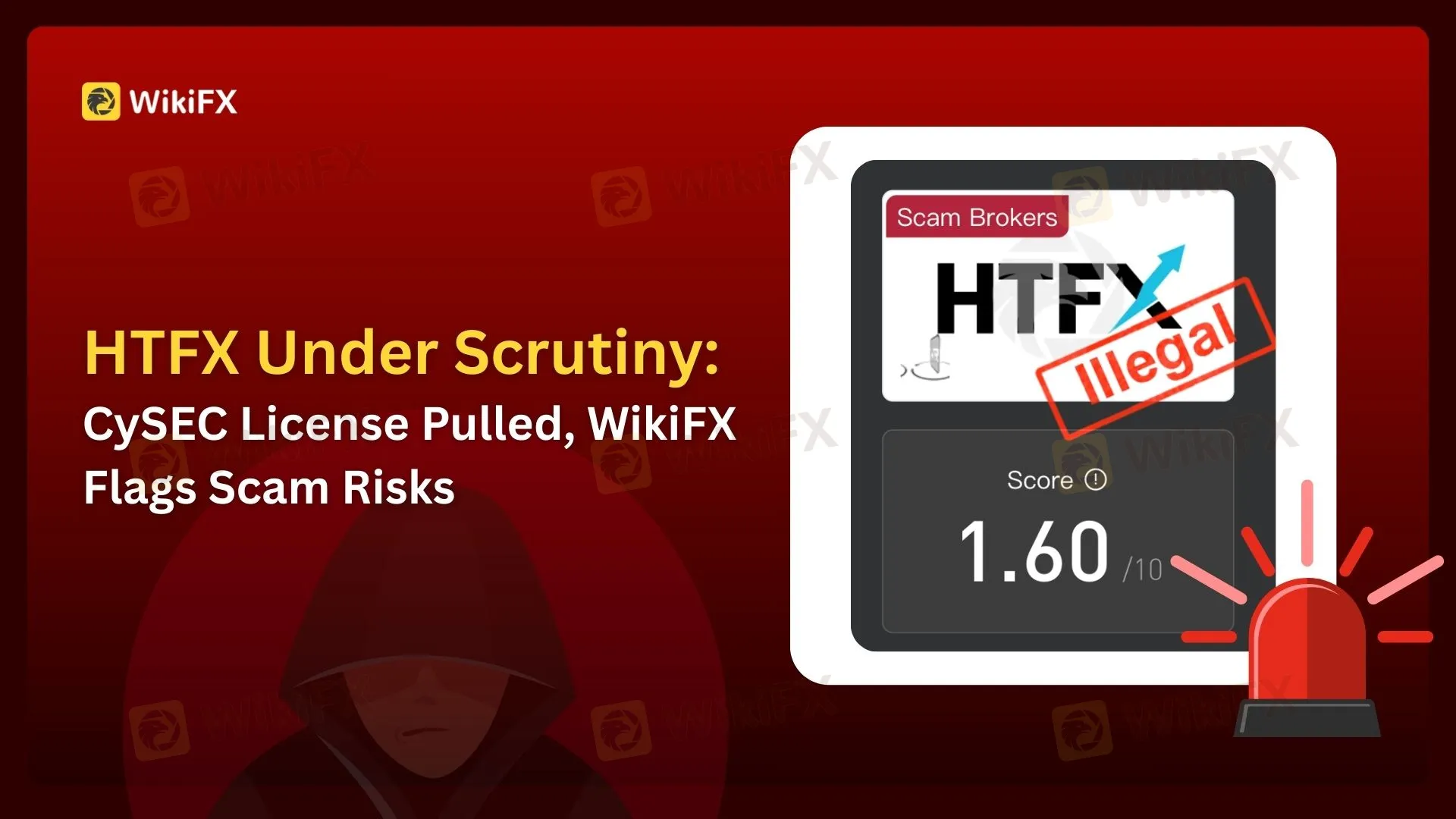
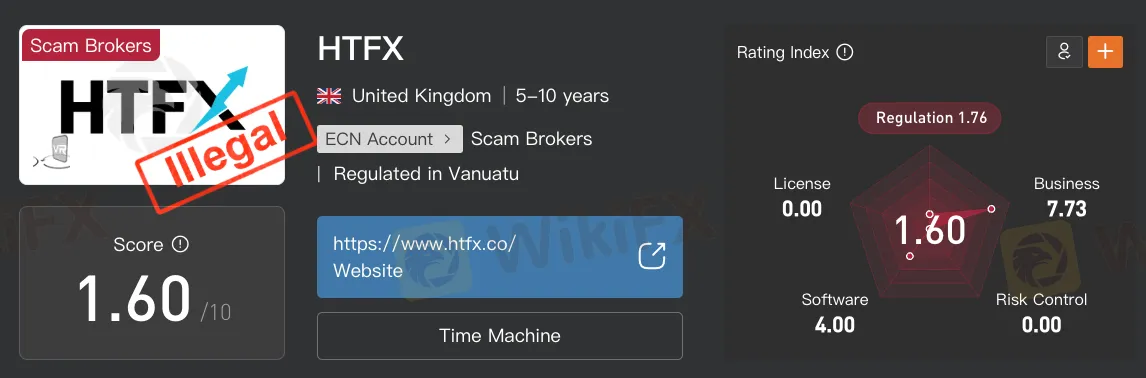
HTFX, a CFD and forex broker that previously claimed multiple regulatory approvals, is now facing intensified scrutiny after Cyprus regulator CySEC confirmed the withdrawal of its investment firm license. At the same time, third-party risk platforms including WikiFX have classified HTFX as a high-risk broker, citing expired licenses, offshore regulation, and a growing number of unresolved withdrawal complaints. Together, these developments raise serious concerns about fund safety and operational transparency for retail traders.
 Contents
Cyprus Securities and Exchange Commission (CySEC) has confirmed that HTFX (EU) Ltd has formally relinquished its Cyprus Investment Firm (CIF) authorization, ending its ability to provide regulated investment services within or from Cyprus. This step finalizes the companys own decision to walk away from the EU regulatory framework and removes its status as a CySEC-supervised firm.
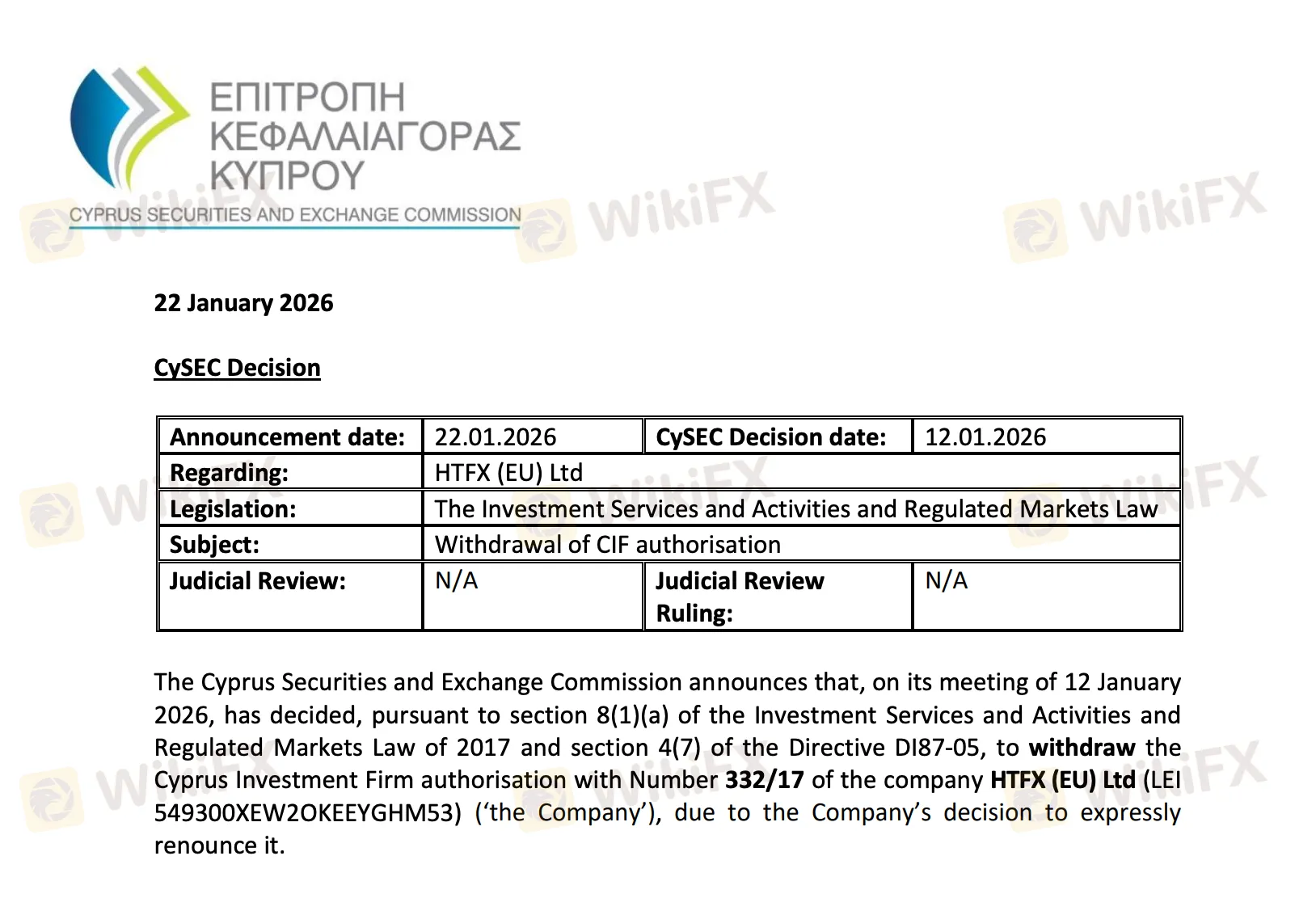
Once a CIF license is withdrawn, the firm must cease regulated activities and follow wind-down obligations, including notifying clients and addressing any remaining liabilities linked to its former licensed operations. HTFX now joins a growing list of brokers that have exited the Cyprus regime over the past year, reflecting broader shifts in compliance costs and regulatory expectations across the EU financial sector.
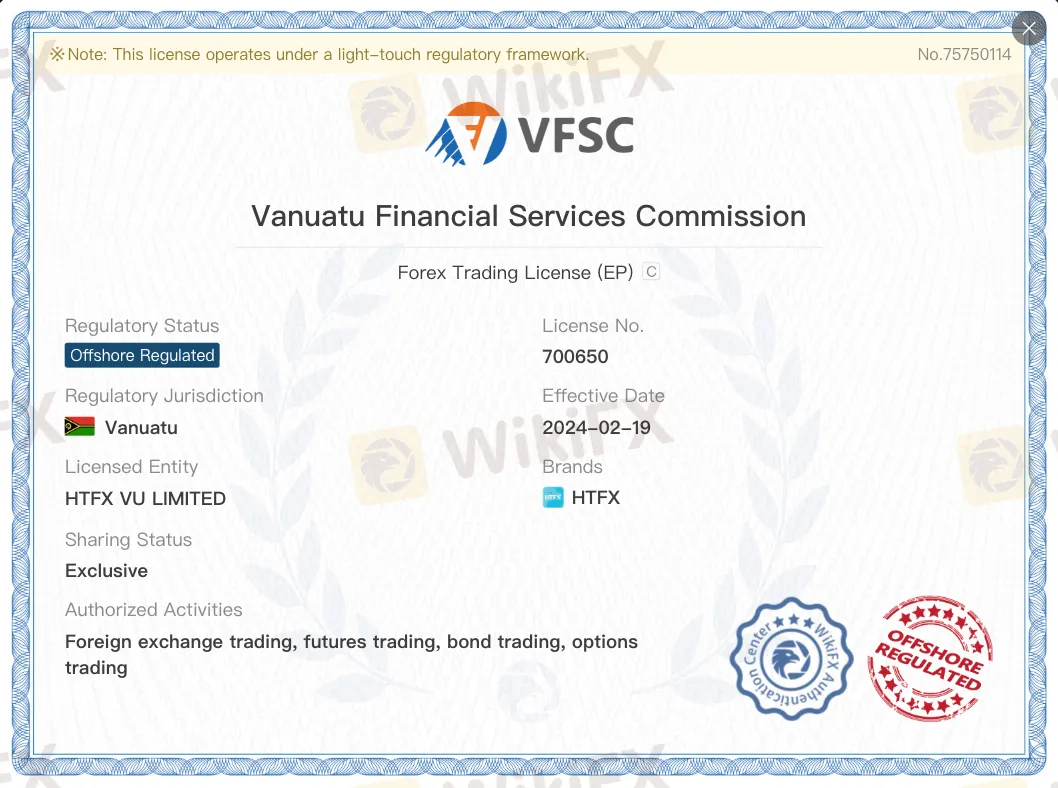
According to WikiFX records, HTFX no longer holds any valid major onshore regulatory licenses. Previous claims of FCA and CySEC regulation are now listed as expired, leaving only an offshore Vanuatu VFSC license, which operates under a light-touch supervisory framework with limited investor protection mechanisms.
WikiFX has explicitly labeled HTFX as a “Scam Broker” and issued warnings that the platform shows characteristics consistent with high-risk or Ponzi-style fund circulation models, especially where new deposits may be used to meet earlier withdrawal requests.
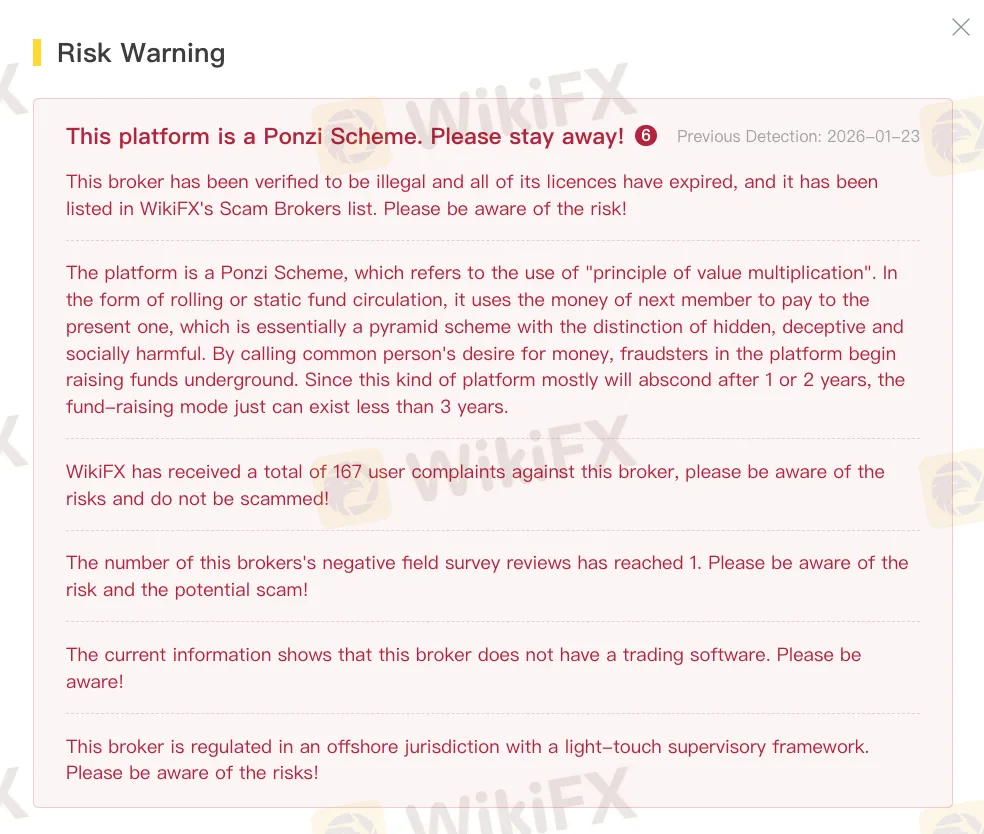
More details can be found on the WikiFX broker page: https://www.wikifx.com/en/dealer/9814677820.html
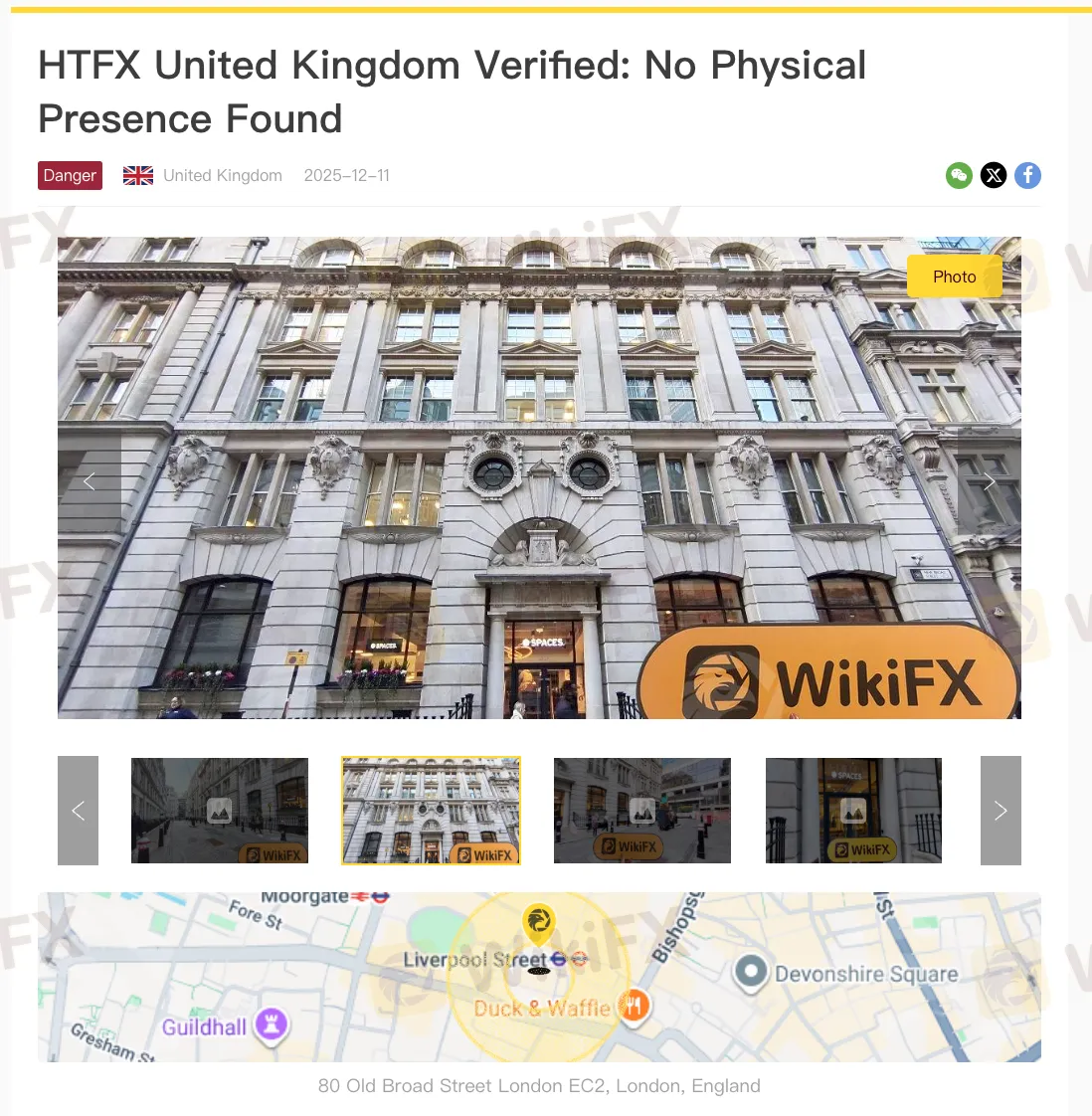
As part of its field investigation program, WikiFX conducted an on-site visit to HTFX‘s publicly listed UK office address at 35 New Broad Street, EC2M 1NH, located in London’s financial district. While investigators were able to reach the building, no signage, office listing, or physical indication of HTFX operations was found at the location.
This type of discrepancy between registered addresses and physical presence is often viewed by compliance professionals as a potential red flag, particularly when combined with regulatory exits and customer fund disputes.
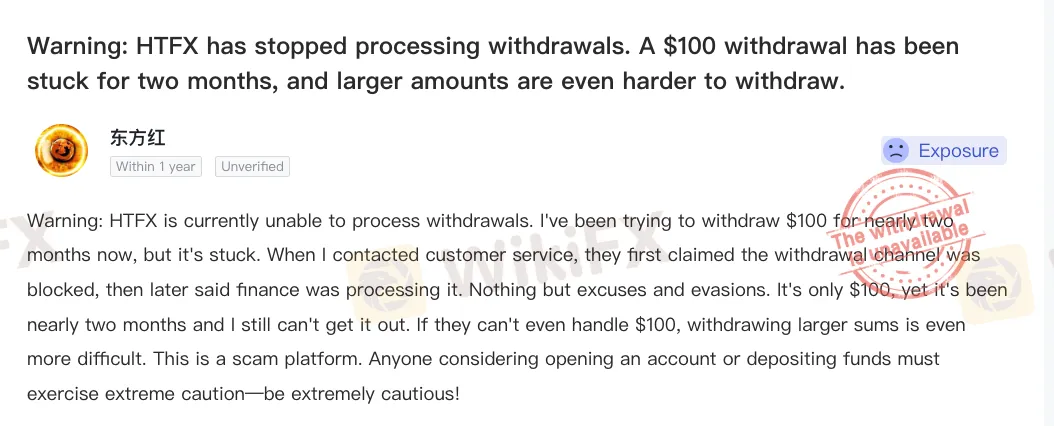
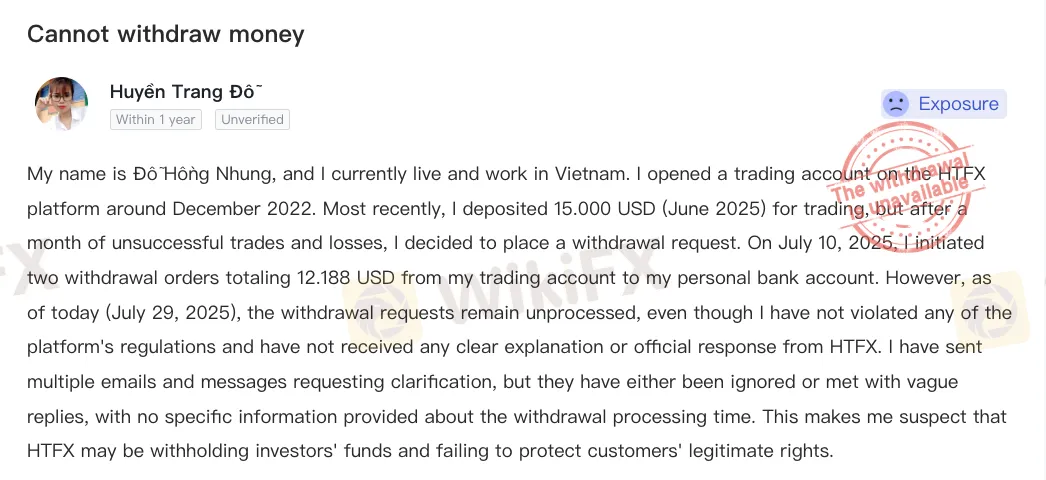
Beyond regulatory status, user feedback patterns provide another critical risk signal. WikiFX exposure records and user submissions show repeated complaints where withdrawal requests are marked as “completed” on the platform but funds never reach the clients account.
In multiple cases, users report being told by customer service that delays are caused by “payment channel issues,” with waiting periods extending beyond one month. Other complaints describe being asked to pay additional fees, taxes, or activation charges before withdrawals can be processed, only to face further delays afterward.
Such patterns are commonly associated with high-risk platforms where withdrawal conditions change after deposits are made, limiting clients ability to recover funds once trading has begun.
Individually, the loss of a regulatory license, offshore supervision, or customer complaints may not always be decisive. However, when these factors appear simultaneously, they form a consistent risk profile that traders should not ignore.
HTFX‘s withdrawal from CySEC oversight removes EU-level investor protections. WikiFX’s classification highlights expired licenses and structural risks. Meanwhile, user reports consistently point to difficulties accessing funds after deposits are made.
For retail traders, these overlapping signals significantly increase uncertainty around capital safety, dispute resolution, and operational accountability. In such conditions, caution is not only advisable but necessary.
WikiFX is a global broker information and risk monitoring platform focused on regulatory verification, exposure tracking, and on-site inspections. By aggregating official licensing data and real user reports, WikiFX helps traders identify potential risks before opening accounts or depositing funds, especially when brokers undergo regulatory changes or operate under offshore frameworks.

Disclaimer:
The views in this article only represent the author's personal views, and do not constitute investment advice on this platform. This platform does not guarantee the accuracy, completeness and timeliness of the information in the article, and will not be liable for any loss caused by the use of or reliance on the information in the article.
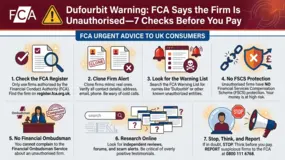
The FCA warned about Dufourbit on 19 August 2026. Check the named domain, contact details, missing protections and seven steps before making any payment.
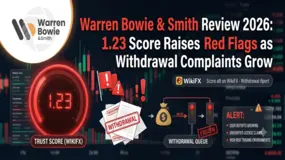
Was your trading experience with Warren Bowie & Smith, a Mauritius-based brokerage entity, not so fruitful? Did the broker tempt you into trading by giving you assurances of profits that never appeared on the Warren Bowie & Smith login dashboard? Did you struggle to withdraw profits from the trading platform? Upon your withdrawal request, did the broker official make you invest further? This Warren Bowie & Smith review examines serious trading allegations against the broker. Additionally, we have provided the broker’s regulatory status.
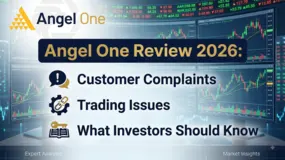
Angel One, an India-based brokerage entity, constantly receives allegations from users online. Users are complaining about withheld funds, poor customer support service, undesired trade execution orders, etc. In this Angel One review, let’s quickly go through these complaints, understand its regulatory framework and pay attention to the product portfolio.
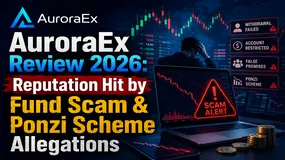
AuroraEx, a United States-based multi-asset brokerage entity, is facing serious user allegations over how it handles deposited funds. Many users have accused the broker of failing to meet its payment obligations. Some have questioned the broker over possible trade-related foul play, while others have alleged that it scammed them through a Ponzi operation. This AuroraEx review examines these user-reported allegations and provides an overview of the broker’s regulatory status.
WikiFXWikiFXWikiFXWikiFXWikiFXWikiFXWikiFXWikiFXWikiFXWikiFX