


Dufourbit Warning: FCA Says the Firm Is Unauthorised—7 Checks Before You Pay
The FCA warned about Dufourbit on 19 August 2026. Check the named domain, contact details, missing protections and seven steps before making any payment.
Original

简体中文
繁體中文
English
Pусский
日本語
ภาษาไทย
Tiếng Việt
Bahasa Indonesia
Español
हिन्दी
Filippiiniläinen
Français
Deutsch
Português
Türkçe
한국어
العربية
اردو




Abstract:If you are looking into ICM Capital (also known simply as ICM), you might be attracted by their established history since 2017 or their access to the MetaTrader platforms. However, glancing at the surface isn't enough when your capital is at risk. With a concerning WikiFX Score of 2.46 out of 10, this broker is currently flashing warning signals that every potential client needs to understand before hitting the "Deposit" button.

If you are looking into ICM Capital (also known simply as ICM), you might be attracted by their established history since 2017 or their access to the MetaTrader platforms. However, glancing at the surface isn't enough when your capital is at risk. With a concerning WikiFX Score of 2.46 out of 10, this broker is currently flashing warning signals that every potential client needs to understand before hitting the “Deposit” button.
In this guide, we strip away the marketing jargon to look at the hard data: their actual regulatory status, the specific withdrawal issues users are reporting, and whether their trading environment is safe for retail investors in 2025.
The short answer is: Not robustly, and there are significant regulatory gaps.
While ICM claims multiple regulations, a closer look at the data reveals a mix of offshore licenses, expired statuses, and official warnings.
Currently, ICM Capitals primary valid regulation appears to be from the Seychelles Financial Services Authority (FSA). This is classified as an “Offshore Regulation.”
Why does this matter? Offshore regulators like the FSA in Seychelles generally have looser requirements compared to Tier-1 regulators like the FCA (UK) or ASIC (Australia).
The WikiFX database highlights several critical issues with other licenses ICM claims or previously held:
When a broker accumulates warnings from multiple government agencies, it is often a sign that they are operating aggressively in regions where they do not have legal clearance, putting clients in those regions at legal and financial risk.
While regulatory status is theoretical, user feedback is practical. Recently, the volume of complaints has spiked, with 16 reports logged in just the last three months. A recurring theme in the feedback is the inability to access funds and technical failures at critical market moments.
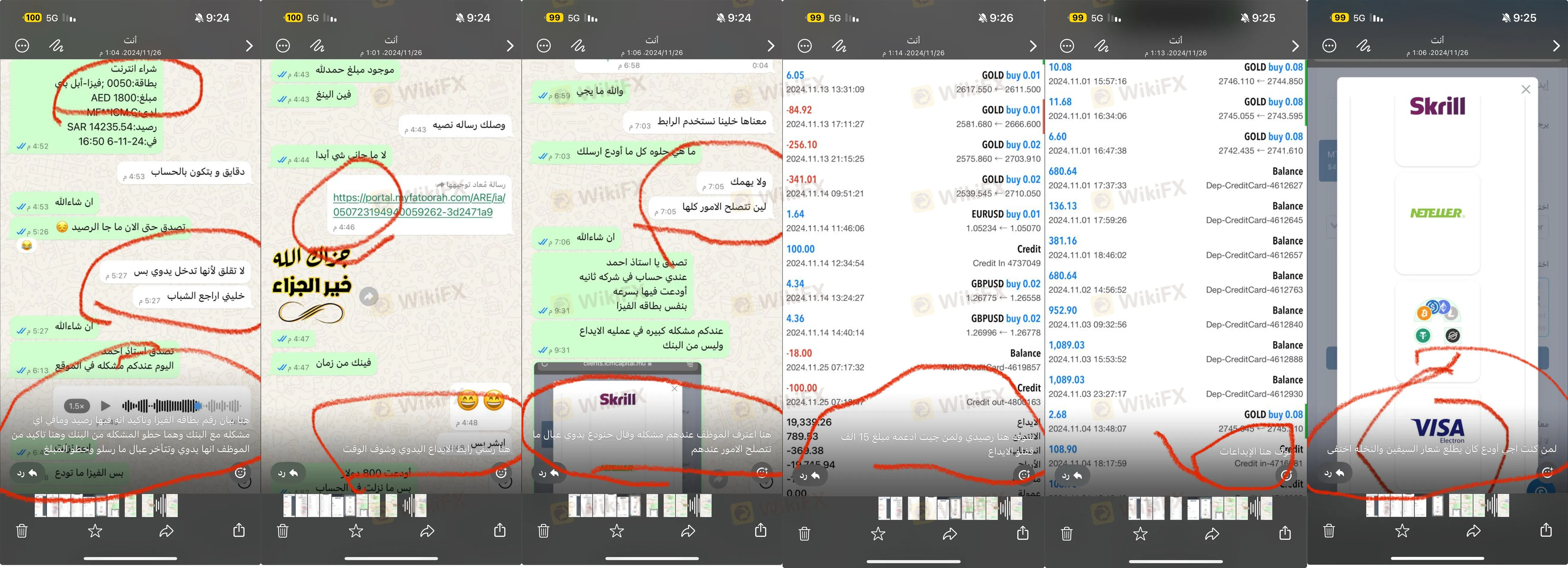
One particularly harrowing story comes from a trader in Saudi Arabia. During a period where the price of Gold was dropping, the trader attempted to deposit funds ($3,000) to support his margin and prevent his positions from being liquidated.
According to the report, the deposit failed despite using a card that previously worked. Support allegedly told him the deposit had to be done “manually” and delayed the process by over an hour. By the time the funds cleared, it was too late—the market had moved, and the delay caused significant losses. This highlights a critical risk: if a broker's payment gateway isn't instant during high volatility, your risk management strategy becomes useless.
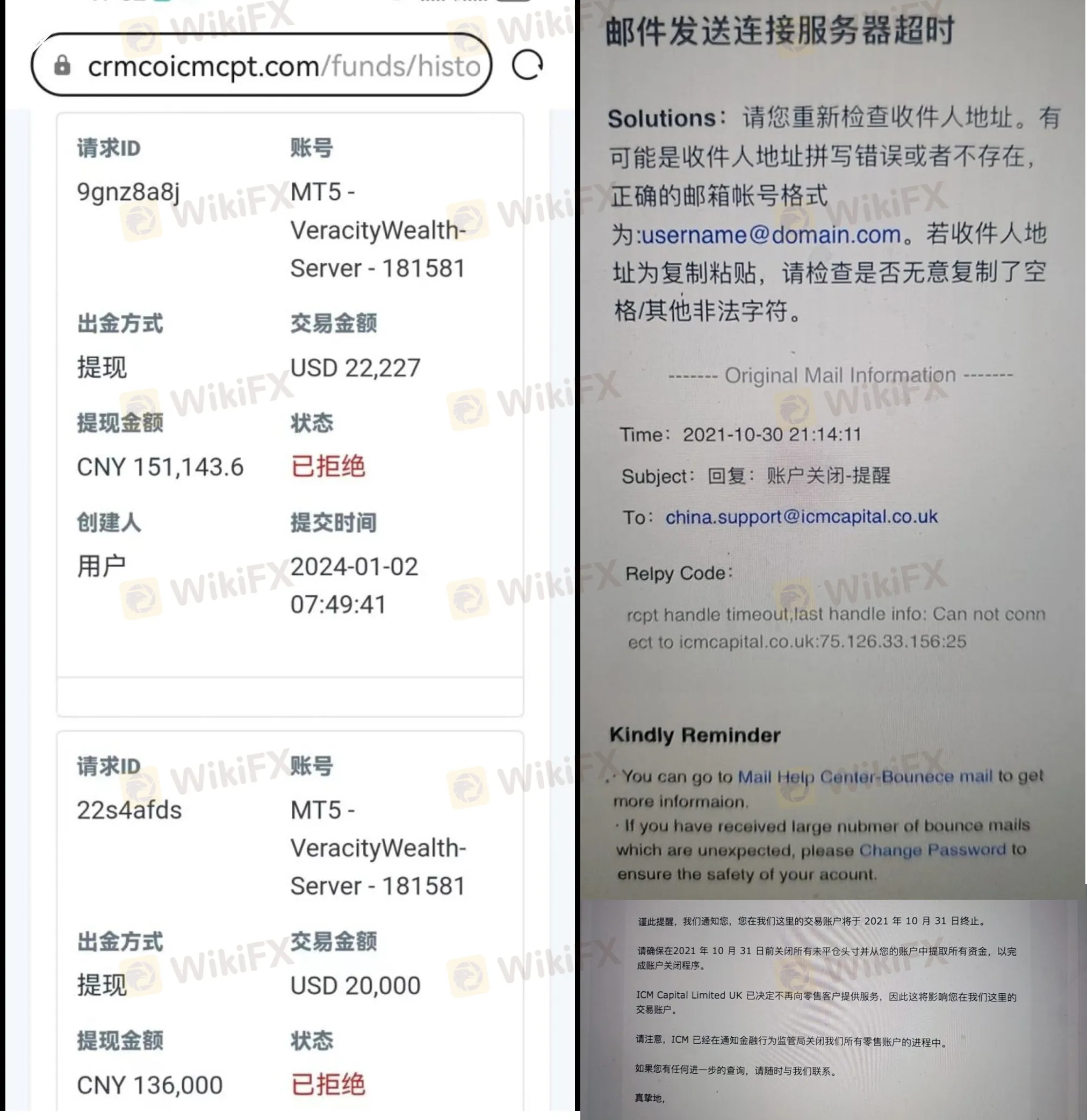
Another consistent complaint involves the “Hotel California” effect: you can check in (deposit), but you can't leave (withdraw). A user from India detailed an experience where they deposited via Webmoney but found the option to withdraw via Webmoney had vanished. Despite trying alternative methods, every request was rejected without a clear explanation.
This is a common tactic seen in lower-rated brokers. They may claim “Anti-Money Laundering” rules prevent withdrawals to different sources, but then fail to provide the original source as an option, effectively trapping the client's funds indefinitely.
A user from China reported a severe anomaly involving Bitcoin. They claimed that on January 2nd, the ICM platform showed a massive 10,000-point drop in price that triggered liquidations, a drop that reportedly did not happen on the wider international market.
This phenomenon is often called a “scam wick” or “stop hunting,” where a broker's proprietary data feed momentarily spikes to wipe out client stop-losses or leverage, even though the real market didn't move that way.
If you overlook the safety risks, the trading environment itself is fairly standard, though it lacks modern security features.
ICM offers a maximum leverage of 1:30.
For many retail traders, this is actually a responsible limit (aligned with European standards). High leverage (like 1:500) acts as a double-edged sword; while it can amplify profits, it usually wipes out beginner accounts in minutes during volatility. A 1:30 cap suggests they are adhering to some risk management standards in their account structuring, even if their regulation is loose.
They offer two main account types: ICM ZERO and ICM DIRECT.
The “Zero” account implies spreads starting from 0 pips, likely charging a commission per lot instead. This is generally the preferred structure for day traders and scalpers (whom ICM claims to allow). However, strict attention should be paid to withdrawal exchange rates. One user complaint noted a massive discrepancy between deposit rates (7.2) and withdrawal valuation (6.8), which acts as a hidden fee of nearly 6% on your capital.
ICM supports the industry-standard MT4 and MT5 platforms, alongside a proprietary mobile app.
Based on the data, ICM Capital presents a high-risk profile for reputable traders.
While they have been operating since 2017 and offer standard MetaTrader platforms, the negatives outweigh the positives. The combination of a low 2.46 score, multiple regulatory warnings (Spain, Indonesia, Malaysia), and a recent surge in complaints regarding denied withdrawals and price manipulation makes this a dangerous place for your money.
The Verdict: There are far safer, strictly regulated brokers available that do not have a history of blocking withdrawals. It is advisable to avoid brokers with “Offshore Only” regulation if you value the safety of your principal investment.
Markets change fast, and brokers sometimes update their licenses. To verify their current license status before depositing, search for ICM on the WikiFX App.
Disclaimer:
The views in this article only represent the author's personal views, and do not constitute investment advice on this platform. This platform does not guarantee the accuracy, completeness and timeliness of the information in the article, and will not be liable for any loss caused by the use of or reliance on the information in the article.
The FCA warned about Dufourbit on 19 August 2026. Check the named domain, contact details, missing protections and seven steps before making any payment.
Was your trading experience with Warren Bowie & Smith, a Mauritius-based brokerage entity, not so fruitful? Did the broker tempt you into trading by giving you assurances of profits that never appeared on the Warren Bowie & Smith login dashboard? Did you struggle to withdraw profits from the trading platform? Upon your withdrawal request, did the broker official make you invest further? This Warren Bowie & Smith review examines serious trading allegations against the broker. Additionally, we have provided the broker’s regulatory status.
Angel One, an India-based brokerage entity, constantly receives allegations from users online. Users are complaining about withheld funds, poor customer support service, undesired trade execution orders, etc. In this Angel One review, let’s quickly go through these complaints, understand its regulatory framework and pay attention to the product portfolio.
AuroraEx, a United States-based multi-asset brokerage entity, is facing serious user allegations over how it handles deposited funds. Many users have accused the broker of failing to meet its payment obligations. Some have questioned the broker over possible trade-related foul play, while others have alleged that it scammed them through a Ponzi operation. This AuroraEx review examines these user-reported allegations and provides an overview of the broker’s regulatory status.
WikiFXWikiFXWikiFXWikiFXWikiFXWikiFXWikiFXWikiFXWikiFXWikiFX