


Dufourbit Warning: FCA Says the Firm Is Unauthorised—7 Checks Before You Pay
The FCA warned about Dufourbit on 19 August 2026. Check the named domain, contact details, missing protections and seven steps before making any payment.
Original

简体中文
繁體中文
English
Pусский
日本語
ภาษาไทย
Tiếng Việt
Bahasa Indonesia
Español
हिन्दी
Filippiiniläinen
Français
Deutsch
Português
Türkçe
한국어
العربية
اردو




Abstract:The Financial Sector Conduct Authority (FSCA) in South Africa just released a massive batch of warnings for November 2025. We are talking about an avalanche of red flags. From "copy trading" experts who promise to turn pocket change into a luxury sedan overnight, to brazen criminals impersonating the FSCA itself, the landscape is treacherous right now.

By the WikiFX Global Scam Hunter
Positioning: Senior Chief Editor & Market Analyst (Africa Region)
If you thought the scammers were taking an early holiday break in November, think again. In fact, theyve been working overtime.
The Financial Sector Conduct Authority (FSCA) in South Africa just released a massive batch of warnings for November 2025. We are talking about an avalanche of red flags. From “copy trading” experts who promise to turn pocket change into a luxury sedan overnight, to brazen criminals impersonating the FSCA itself, the landscape is treacherous right now.
But here is the good news: The regulator isn't just barking; they are biting. Licenses have been stripped, and heavy fines have been levied.
As your dedicated “Scam Hunter” at WikiFX, I've combed through these dry regulatory texts to decode the psychology behind the traps. We aren't just going to list names; we're going to dissect how they try to steal your hard-earned Rand so you can spot them a mile away.
If there is one dominant trend in the November warnings, it is Impersonation.
Scammers have realized that building a reputation is hard work. So, they decided to steal yours—or rather, the reputations of legitimate Financial Services Providers (FSPs).
The FSCA flagged over 10 different cases this month where scammers set up Telegram or WhatsApp groups pretending to be well-known, authorized entities.
WikiFX Reality Check: Legitimate CEOs of major financial firms do not run Telegram groups where they personally ask you to deposit R1,000 via WhatsApp. If “Alexander Forbes” is messaging you at 10 PM with emojis asking for Bitcoin, block them immediately.
The most amusing (and tragic) part of the November warnings comes from the entities promising returns that defy the laws of economics.
The Promise: They claimed to offer “daily returns of up to 98%.”
The Micro-Analysis: Lets do the math. If you invested R100 at a 98% daily compound return, within 30 days, you would own more money than exists on the entire planet.
The Catch: When you try to withdraw your trillions, they hit you with a “15% service usage fee.” This is the classic Advance Fee Fraud. The profits on the screen are fake pixels; the fee you pay to “unlock” them is real money lost.
The Promise: Turn R1,000 into R16,000 in 24 hours.
The Psychology: This targets desperation. Scammers know that an R1,000 entry point is affordable for many. They aren't looking for one millionaire; they are looking for 1,000 people with R1,000.
The Verdict: There is no trading strategy in the history of Wall Street that generates a 1,500% return in one day. This is a Ponzi scheme, pure and simple.
This is perhaps the most malicious scam in the batch. The FSCA warned against an individual named “Rick Steiner.”
Rick claims to be a “Chief Executive Investigator” from the FSCA. He contacts people who have already been scammed.
Regulatory Fact:The FSCA does not recover funds for individuals, and they certainly never ask for fees to release frozen assets. If the “police” ask for a processing fee via crypto, they aren't the police.
It's not all warnings; sometimes, it's punishment. The FSCA took decisive action in November that serves as a warning to rogue brokers.
The FSCA fined Ms. Chantelle Kleynhans R1.55 million and Mr. Pieter van der Walt R550,000, debarring both for 20 years.
The licenses of Medbond Markets and Medbond Insurance Brokers were withdrawn.
The scammers are getting better at graphic design, but they are terrible at compliance. Here is how you use WikiFX to protect yourself in 30 seconds.
When someone claims to be “Exness” or “Avior Capital” on Telegram:
Use the WikiFX Exposure section to see what other traders are saying.
The FSCA warns that you must verify the individual.
The volume of warnings this November is unprecedented. The sheer number of “Impersonation” scams tells us that criminals are moving away from creating fake brands and are now focused on hijacking real ones.
Do not trust; always verify.
If you are currently in a WhatsApp group called “VIP Investment” or “Gold Signals” run by a famous CEO, leave it. If you have been approached by “Rick Steiner” from the FSCA, block him.
Stay safe, trade smart, and keep your WikiFX app handy—its the best shield you have in this digital jungle.
Disclaimer:
The views in this article only represent the author's personal views, and do not constitute investment advice on this platform. This platform does not guarantee the accuracy, completeness and timeliness of the information in the article, and will not be liable for any loss caused by the use of or reliance on the information in the article.
The FCA warned about Dufourbit on 19 August 2026. Check the named domain, contact details, missing protections and seven steps before making any payment.
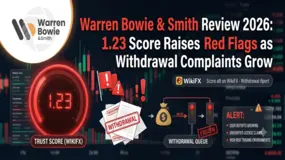
Was your trading experience with Warren Bowie & Smith, a Mauritius-based brokerage entity, not so fruitful? Did the broker tempt you into trading by giving you assurances of profits that never appeared on the Warren Bowie & Smith login dashboard? Did you struggle to withdraw profits from the trading platform? Upon your withdrawal request, did the broker official make you invest further? This Warren Bowie & Smith review examines serious trading allegations against the broker. Additionally, we have provided the broker’s regulatory status.
Angel One, an India-based brokerage entity, constantly receives allegations from users online. Users are complaining about withheld funds, poor customer support service, undesired trade execution orders, etc. In this Angel One review, let’s quickly go through these complaints, understand its regulatory framework and pay attention to the product portfolio.
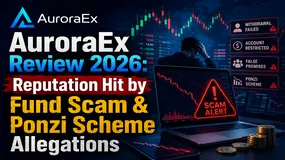
AuroraEx, a United States-based multi-asset brokerage entity, is facing serious user allegations over how it handles deposited funds. Many users have accused the broker of failing to meet its payment obligations. Some have questioned the broker over possible trade-related foul play, while others have alleged that it scammed them through a Ponzi operation. This AuroraEx review examines these user-reported allegations and provides an overview of the broker’s regulatory status.
WikiFXWikiFXWikiFXWikiFXWikiFXWikiFXWikiFXWikiFXWikiFXWikiFX