


Dufourbit Warning: FCA Says the Firm Is Unauthorised—7 Checks Before You Pay
The FCA warned about Dufourbit on 19 August 2026. Check the named domain, contact details, missing protections and seven steps before making any payment.
Original

简体中文
繁體中文
English
Pусский
日本語
ภาษาไทย
Tiếng Việt
Bahasa Indonesia
Español
हिन्दी
Filippiiniläinen
Français
Deutsch
Português
Türkçe
한국어
العربية
اردو




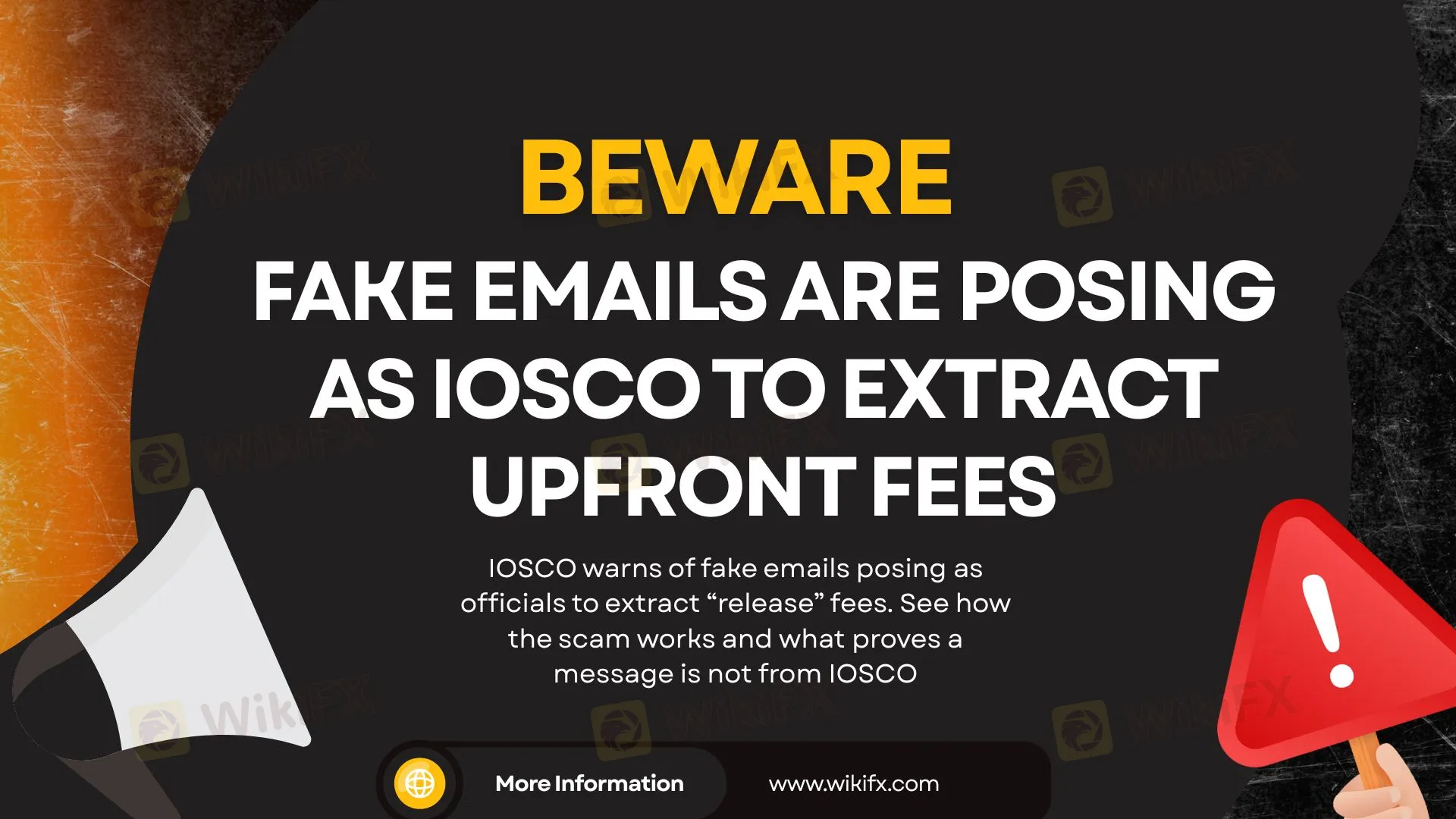
Abstract:IOSCO warns of fake emails posing as officials to extract “release” fees. See how the scam works and what proves a message is not from IOSCO.
 Contents
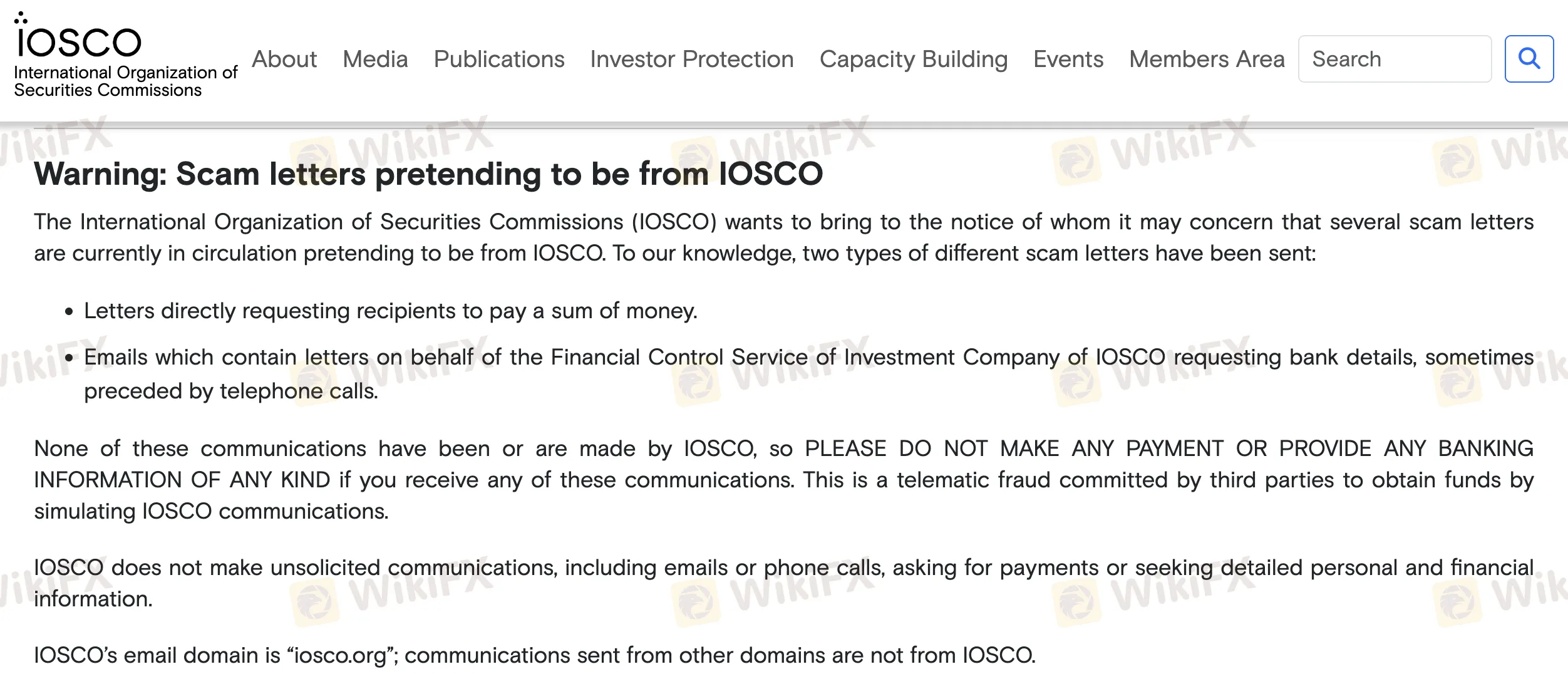
The International Organization of Securities Commissions (IOSCO) has raised the alarm over a new round of frauds in which criminals present themselves as commission staff and pressure investors to pay “processing” or “release” charges. The approaches include letters that directly ask for money and emails that claim to come from invented departments—one recent example cited a so-called “Financial Control Service of Investment Company of IOSCO”—and then request bank details or copies of personal documents. IOSCO stresses it does not charge fees to unlock funds, does not solicit payments, and communicates only from addresses ending in @iosco.org.
IOSCO is the global association of securities regulators. It develops common standards for market integrity and investor protection and helps authorities cooperate across borders. It does not license brokers, hold client money, resolve individual disputes, or ask investors to pay for “certificates,” “clearances,” or “fund releases.”

Any message invoking IOSCO and demanding money or sensitive data should be treated as a red flag.
The pitch is tailored to people active in online markets, including forex and CFDs. Victims are told a final “compliance step” or “clearance” is required before their money can be released, or that a certificate must be issued urgently—if they pay first. Because the notes borrow IOSCO‘s name and tone, and sometimes mimic official formatting, they can look convincing to retail traders who are used to KYC requests and platform notifications. IOSCO’s advisory is unequivocal: if the message asks for money or sensitive data, it isnt from them.
The brand-copying doesnt stop at logos. IOSCO also cautions that web addresses— even financial-sounding endings like .forex, .markets, or .trading—do not prove a website or broker is authorised. For forex and CFD traders, that matters: a polished domain name and a familiar platform template can still sit behind an unregulated operation or a straight impersonation. The takeaway is simple: never infer legitimacy from a URL alone.
These messages exploit familiar habits: uploading documents, responding quickly to platform prompts, and ticking compliance boxes. By copying the cadence of genuine requests—“final verification,” “funds release,” “account unfreeze”—fraudsters nudge recipients into paying a fee or handing over banking details. The rule of thumb holds: real oversight bodies don‘t ask you to pay to unlock money that is already yours, and they won’t email from look-alike domains.
Disclaimer:
The views in this article only represent the author's personal views, and do not constitute investment advice on this platform. This platform does not guarantee the accuracy, completeness and timeliness of the information in the article, and will not be liable for any loss caused by the use of or reliance on the information in the article.
The FCA warned about Dufourbit on 19 August 2026. Check the named domain, contact details, missing protections and seven steps before making any payment.
Was your trading experience with Warren Bowie & Smith, a Mauritius-based brokerage entity, not so fruitful? Did the broker tempt you into trading by giving you assurances of profits that never appeared on the Warren Bowie & Smith login dashboard? Did you struggle to withdraw profits from the trading platform? Upon your withdrawal request, did the broker official make you invest further? This Warren Bowie & Smith review examines serious trading allegations against the broker. Additionally, we have provided the broker’s regulatory status.
Angel One, an India-based brokerage entity, constantly receives allegations from users online. Users are complaining about withheld funds, poor customer support service, undesired trade execution orders, etc. In this Angel One review, let’s quickly go through these complaints, understand its regulatory framework and pay attention to the product portfolio.
AuroraEx, a United States-based multi-asset brokerage entity, is facing serious user allegations over how it handles deposited funds. Many users have accused the broker of failing to meet its payment obligations. Some have questioned the broker over possible trade-related foul play, while others have alleged that it scammed them through a Ponzi operation. This AuroraEx review examines these user-reported allegations and provides an overview of the broker’s regulatory status.
WikiFXWikiFXWikiFXWikiFXWikiFXWikiFXWikiFXWikiFXWikiFXWikiFX