


Wealth-db.co.uk FCA Warning: How to Spot the DB UK Bank Clone
The FCA says wealth-db.co.uk is a clone of DB UK Bank Limited. Compare the fake contact details, genuine FRN, website, and seven checks before paying.
Original

简体中文
繁體中文
English
Pусский
日本語
ภาษาไทย
Tiếng Việt
Bahasa Indonesia
Español
हिन्दी
Filippiiniläinen
Français
Deutsch
Português
Türkçe
한국어
العربية
اردو




Abstract:Leverage amplifies both potential profits and risks. Understanding how to calculate leverage and margin helps traders manage risks and avoid forced liquidation.

Leverage allows traders to control a larger trading position with a smaller amount of capital, effectively borrowing funds from a broker. Margin, on the other hand, is the amount of money required to open and maintain a position, serving as collateral. It is usually expressed as a percentage of the total trade value.
There are two types of margin:
Used Margin: The amount of capital currently allocated to maintain open positions.
Available Margin: The remaining capital in the account that can be used to open new positions.
For example, if a trader has a total account balance of $5,000 and $3,800 is used margin, then $1,200 remains available for new trades.
The margin calculation formula is:
Margin= (Trade Volume×Contract Size×Asset Price)/Leverage
For example, if a trader wants to buy 3 lots of EUR/USD at an asset price of $1.10 with a leverage of 30:1, the required margin would be:
(3×100,000×1.10)÷30=11,000 USD
Another crucial metric is the margin level, which is calculated as:
Margin Level=(Equity/Used Margin)×100
A higher margin level indicates more available margin relative to borrowed funds, reducing risk. If the margin level falls below 100%, a margin call will be triggered, warning the trader to deposit more funds or reduce positions. If the margin level drops to 50%, the system may forcefully close positions to prevent further losses.
Leverage is a double-edged sword—it can magnify profits, but it also increases the risk of significant losses. For example, if a trader has $1,000 in their account and uses 100:1 leverage, they can control a $100,000 position. However, a 1% unfavorable price movement could wipe out their entire capital.
Therefore, it is crucial to use leverage cautiously. Beginner traders are advised to start with lower leverage (e.g., 10:1 or 20:1) and use stop-loss orders to limit risk. Practicing with a demo account can also help traders gain experience with margin trading before committing real capital.

Disclaimer:
The views in this article only represent the author's personal views, and do not constitute investment advice on this platform. This platform does not guarantee the accuracy, completeness and timeliness of the information in the article, and will not be liable for any loss caused by the use of or reliance on the information in the article.
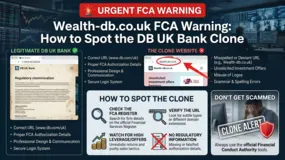
The FCA says wealth-db.co.uk is a clone of DB UK Bank Limited. Compare the fake contact details, genuine FRN, website, and seven checks before paying.

UK retail sales fell 0.5% in July 2026, while the three-month measure rose 1.1%. See the ONS details and what the mixed result may mean for GBP.

Pakistan forex reserves stood at $22.506 billion on 13 August 2026, while the SBP dashboard showed a USD/PKR mark to market rate of 277.5713 on 20 August. This article separates the SBP forex reserves facts from predictions about the Pakistan rupee and the forex market Pakistan.
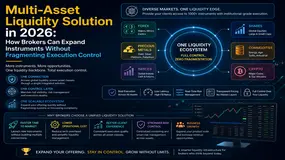
A multi-asset liquidity solution can help a broker support FX, CFDs, commodities, and indices through a more unified operating model. But adding asset classes can also create fragmented symbols, pricing, routing, margin rules, records, and client messages if controls are not designed first. This 2026 guide explains how a multi asset liquidity provider, forex CFD liquidity setup, commodity liquidity provider, and indices liquidity provider fit into a broker-owned execution service. It outlines the due-diligence questions, shared-control model, cost drivers, and 90-day implementation plan that help teams expand without making the execution chain harder to explain. The aim is not to promise deeper liquidity or better trading outcomes. It is to create evidence that a broker can supervise market access, trace order events, reconcile costs, and communicate consistently to the relevant clients when conditions are difficult.
WikiFXWikiFXWikiFXWikiFXWikiFXWikiFXWikiFXWikiFXWikiFXWikiFX