


Dufourbit Warning: FCA Says the Firm Is Unauthorised—7 Checks Before You Pay
The FCA warned about Dufourbit on 19 August 2026. Check the named domain, contact details, missing protections and seven steps before making any payment.
Original

简体中文
繁體中文
English
Pусский
日本語
ภาษาไทย
Tiếng Việt
Bahasa Indonesia
Español
हिन्दी
Filippiiniläinen
Français
Deutsch
Português
Türkçe
한국어
العربية
اردو




Abstract:Frank Ahlgren, a Bitcoin investor, faces 2 years in prison for concealing $4M in crypto gains. DOJ and IRS warn: crypto fraud is traceable.

 Contents
Frank Richard Ahlgren III, a prominent early Bitcoin investor from Austin, Texas, has become the first individual criminally charged in the United States for failing to report cryptocurrency capital gains. This historic case underscores the growing scrutiny of crypto transactions by federal authorities.
Ahlgren, who underreported and concealed proceeds from Bitcoin sales amounting to nearly $4 million, received a two-year prison sentence for his actions. His fraudulent behavior involved inflating the cost basis of bitcoins sold in 2017 and neglecting to report additional crypto sales in subsequent years, causing substantial tax losses.
Ahlgrens journey began in 2011 when he entered the crypto market. In 2015, he acquired 1,366 BTC at a time when Bitcoin was priced below $500. By October 2017, he sold 640 BTC for an average price of $5,807.53, reaping $3.7 million. These funds were reinvested into real estate ventures.
However, the U.S. Department of Justice (DOJ) discovered discrepancies in his 2017 federal tax return. Ahlgren had falsely inflated the cost basis of his Bitcoin holdings to significantly underreport his capital gains. Furthermore, he failed to report an additional $650,000 in Bitcoin sales spanning 2018 and 2019.
To evade detection, Ahlgren used advanced methods to obscure his transactions. He employed multiple wallet transfers, cash deals, and crypto mixers—tools designed to anonymize blockchain activity. Ironically, in a 2014 blog post, Ahlgren wrote about leveraging mixers to hide Bitcoin transactions, a statement that later worked against him in court.
His evasion tactics resulted in a tax loss exceeding $1 million. As a consequence, Ahlgren was not only sentenced to two years in federal prison but also ordered to pay $1.1 million in restitution and serve an additional year of supervised release.

Stuart Goldberg, Acting Deputy Assistant Attorney General of the DOJ‘s Tax Division, stated, “Ahlgren’s deliberate attempts to avoid taxes and conceal his crypto transactions have come with steep penalties.”
Lucy Tan, Acting Special Agent in Charge of the IRS Criminal
Investigation Houston Field Office added:
“Ahlgren believed cryptocurrency transactions were untraceable. Weve proven otherwise. Our expertise and tools can track both fiat and crypto transactions, holding individuals accountable for tax evasion.”
This case comes amid ongoing debates surrounding cryptocurrency tax regulations. Earlier this year, the IRS introduced Form 1099-DA, part of new tax reporting rules designed to treat crypto brokers like traditional brokers of stocks and bonds.
However, blockchain giant Consensys, the developer of MetaMask, has pushed back. In a June letter to the IRS, Consensys argued that the proposed regulations would create an undue burden for entities that historically lacked reporting obligations.
The draft Form 1099-DA broadens the definition of brokers to include kiosk operators, payment processors, and both hosted and unhosted wallet providers. Consensys criticized the lack of clarity in the form, warning it could lead to redundant reporting by multiple parties for the same transaction.
The landmark conviction of Frank Ahlgren serves as a cautionary tale for crypto investors, emphasizing that blockchain anonymity is not foolproof. With advanced tools at their disposal, regulatory agencies like the IRS and DOJ are intensifying their crackdown on crypto tax evasion.
As cryptocurrency adoption grows, so does the regulatory framework surrounding it. This case highlights the importance of transparency and compliance in the crypto space, ensuring that innovation does not come at the cost of accountability.

Disclaimer:
The views in this article only represent the author's personal views, and do not constitute investment advice on this platform. This platform does not guarantee the accuracy, completeness and timeliness of the information in the article, and will not be liable for any loss caused by the use of or reliance on the information in the article.
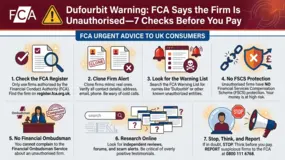
The FCA warned about Dufourbit on 19 August 2026. Check the named domain, contact details, missing protections and seven steps before making any payment.

Gold surged above $4,500 after the US Treasury expanded its purchases of longer-dated government bonds, pushing yields and the dollar lower. But this was not debt forgiveness or Federal Reserve money printing—it was a liquidity operation that exposed a much bigger fear: America may be finding it increasingly difficult to live with market-driven interest rates.

India forex reserves rose by $14.136 billion to $707.002 billion in the week ended 7 August 2026. This explainer separates RBI forex-reserve facts from rupee predictions, explains the role of foreign currency assets and gold, and gives forex-market readers a practical checklist before treating one headline as a trading signal.
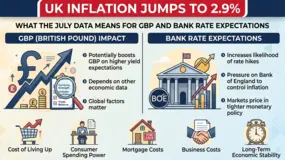
UK CPI rose to 2.9% in July 2026 from 2.6% in June. See what the data may mean for GBP, gilt yields and Bank Rate expectations without overreading one release.
WikiFXWikiFXWikiFXWikiFXWikiFXWikiFXWikiFXWikiFXWikiFXWikiFX