


UK Retail Sales July 2026 Fall 0.5%: What the Result Means for GBP
UK retail sales fell 0.5% in July 2026, while the three-month measure rose 1.1%. See the ONS details and what the mixed result may mean for GBP.
Original

简体中文
繁體中文
English
Pусский
日本語
ภาษาไทย
Tiếng Việt
Bahasa Indonesia
Español
हिन्दी
Filippiiniläinen
Français
Deutsch
Português
Türkçe
한국어
العربية
اردو




Abstract:Forex trading can be unforgiving, especially for traders who possess certain habits that can lead to substantial losses. In this article, we'll explore ten habits that characterize bad traders in Europe and ways to avoid them.
Forex trading can be unforgiving, especially for traders who possess certain habits that can lead to substantial losses. In this article, we'll explore ten habits that characterize bad traders in Europe and ways to avoid them.
Overtrading: Bad traders have a compulsion to trade excessively, even when market conditions are unfavorable. This habit leads to increased transaction costs and potential losses.
Ignoring Risk Management: Bad traders often neglect risk management, putting a significant portion of their capital at risk on a single trade without proper risk control measures.
Lack of Patience: Impatience can be detrimental in forex trading. Bad traders jump into trades hastily without waiting for suitable entry and exit points.
Emotional Trading: Bad traders allow emotions to govern their decisions, leading to erratic trading behavior based on fear or greed.
Greed for Quick Profits: Bad traders seek quick profits and often engage in high-risk strategies, neglecting the importance of sustainable and consistent growth.
No Trading Plan: Bad traders lack a well-defined trading plan and often trade impulsively without a clear strategy in mind.
Ignoring Market Analysis: Instead of conducting thorough analysis, bad traders rely on hearsay or gut feelings, leading to uninformed decisions.
Revenge Trading: After experiencing a loss, bad traders engage in revenge trading, trying to recoup their losses quickly. This approach rarely ends well.
Lack of Learning: Bad traders are resistant to learning and improvement. They refuse to acknowledge mistakes and miss out on opportunities to grow.
Not Seeking Reliable Resources: Bad traders miss out on valuable resources like WikiFX, which provides crucial information, broker reviews, and educational content to help traders make informed decisions. Avoid these bad habits and check out WikiFX today to enhance your trading knowledge and skills.

Disclaimer:
The views in this article only represent the author's personal views, and do not constitute investment advice on this platform. This platform does not guarantee the accuracy, completeness and timeliness of the information in the article, and will not be liable for any loss caused by the use of or reliance on the information in the article.
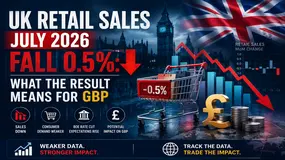
UK retail sales fell 0.5% in July 2026, while the three-month measure rose 1.1%. See the ONS details and what the mixed result may mean for GBP.

Pakistan forex reserves stood at $22.506 billion on 13 August 2026, while the SBP dashboard showed a USD/PKR mark to market rate of 277.5713 on 20 August. This article separates the SBP forex reserves facts from predictions about the Pakistan rupee and the forex market Pakistan.

A multi-asset liquidity solution can help a broker support FX, CFDs, commodities, and indices through a more unified operating model. But adding asset classes can also create fragmented symbols, pricing, routing, margin rules, records, and client messages if controls are not designed first. This 2026 guide explains how a multi asset liquidity provider, forex CFD liquidity setup, commodity liquidity provider, and indices liquidity provider fit into a broker-owned execution service. It outlines the due-diligence questions, shared-control model, cost drivers, and 90-day implementation plan that help teams expand without making the execution chain harder to explain. The aim is not to promise deeper liquidity or better trading outcomes. It is to create evidence that a broker can supervise market access, trace order events, reconcile costs, and communicate consistently to the relevant clients when conditions are difficult.

Gold surged above $4,500 after the US Treasury expanded its purchases of longer-dated government bonds, pushing yields and the dollar lower. But this was not debt forgiveness or Federal Reserve money printing—it was a liquidity operation that exposed a much bigger fear: America may be finding it increasingly difficult to live with market-driven interest rates.
WikiFXWikiFXWikiFXWikiFXWikiFXWikiFXWikiFXWikiFXWikiFXWikiFX