

عالمی بروکر ریگولیشن چیک کرنے والا ایپ
WikiFX
اردو
简体中文
繁體中文
English
Pусский
日本語
ภาษาไทย
Tiếng Việt
Bahasa Indonesia
Español
हिन्दी
Filippiiniläinen
Français
Deutsch
Português
Türkçe
한국어
العربية
اردو


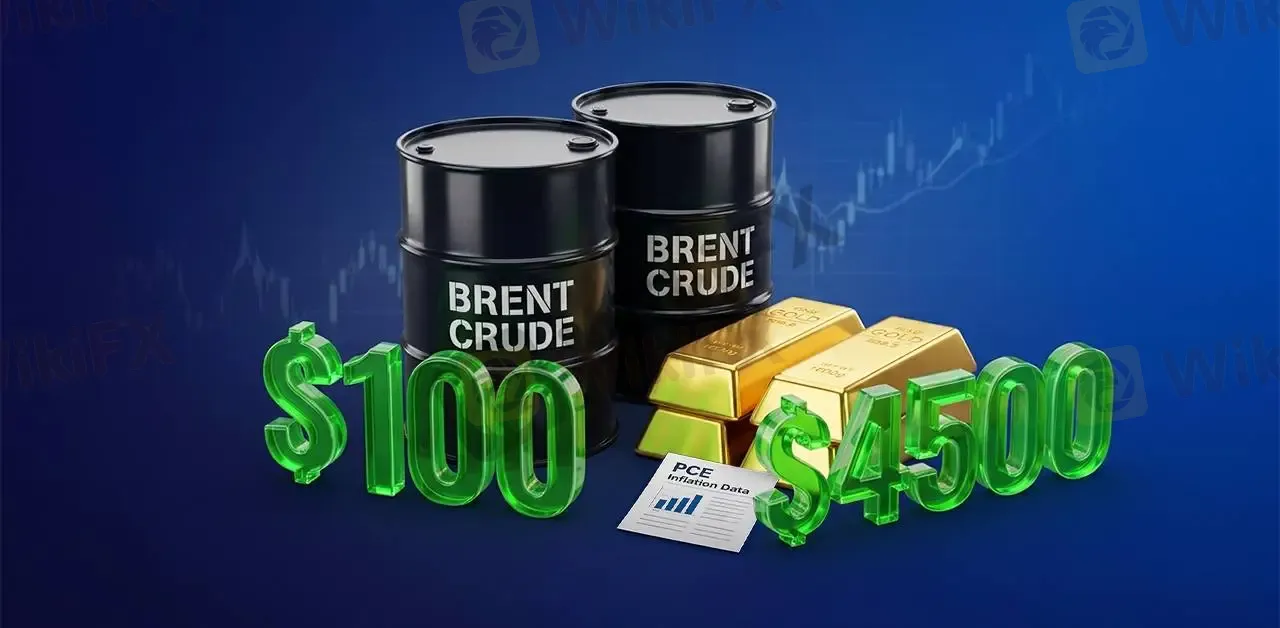
Brent nears $100. Gold breaks above $4,500 as Investors Await PCE Inflation Data Next Week


خلاصہ۔:Key TakeawaysGold surged more than 4% during the week to $4,530–$4,555, for a third straight weekly gain.The Dollar Index fell to a three-month low near 98.50–98.80, down roughly 1% for the week.The 3
Key Takeaways
Gold surged more than 4% during the week to $4,530–$4,555, for a third straight weekly gain.
The Dollar Index fell to a three-month low near 98.50–98.80, down roughly 1% for the week.
The 30-year Treasury yield hit 5.33% intraday, its highest level since 2007.
Treasury‘s surprise move to double long-end debt buybacks triggered gold’s jump and hammered the dollar.
Equities pulled back from record highs in a broad, volatility-driven correction.
Oil prices rise as US-Iran tensions kept inflation fears alive due to higher energy prices.
Gold Breaks Above $4,500
The Dollar Index Slides to Three-Month Low
Stocks Experience a Bond-Driven Correction
Outlook for the Week of August 24–28, 2026
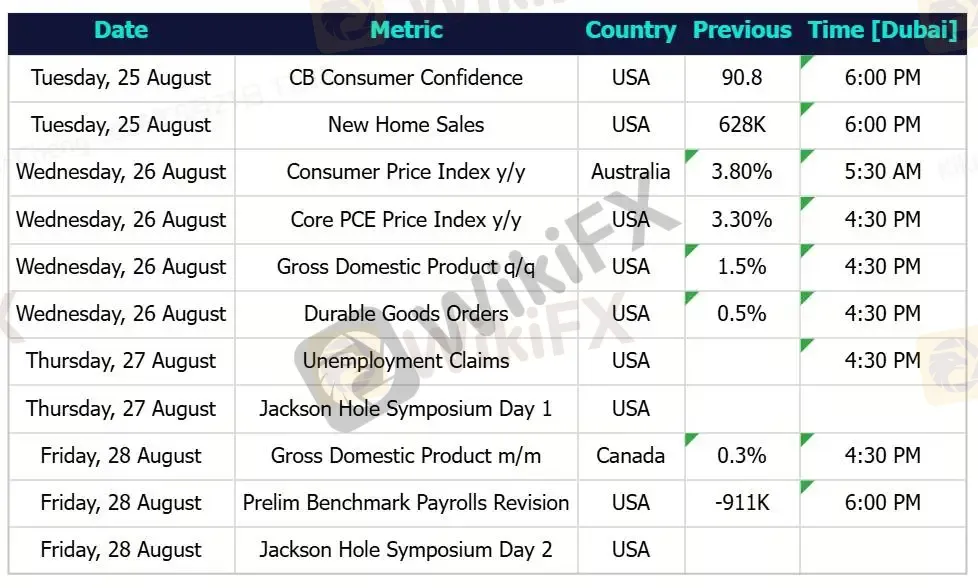
Major Economic Calendar Events for the Upcoming Week
Gold delivered its strongest weekly performance in months, closing in on a third consecutive weekly gain. The prcious metal began the week trading in the mid-$4,300s and traded Friday near $4,530–$4,555 per ounce. Prices jumped after the U.S. Treasury announced it would at least double its long-term debt buyback program. Gold held the bulk of its gains even as Treasury yields partially reversed course on Thursday.
Lower yields reduce the opportunity cost of holding a zero-coupon asset like gold. Layered on top of that was the structural bid gold has enjoyed all year. The central banks bought a record 288 tonnes in the second quarter alone and a dollar that was already on its back foot heading into the announcement.
The U.S. Dollar Index mirrored gold's move in reverse, falling for a fourth straight week to its lowest level since May, briefly touching the mid-98.00s on Thursday before stabilizing near 98.70–98.80 into Friday's close, a weekly decline of roughly 1%. The dollar's slide accelerated the moment the Treasury buyback news hit the tape on Wednesday. Softening Fed rate-hike odds compounded the pressure, expectations for a September hike fell from roughly 40% to the low-30s as traders digested cooler retail sales and inflation prints from earlier in the month.
Equities spent the week grinding lower. The S&P 500, Dow, and Nasdaq fell in four of five sessions this week. Monday and Tuesday saw broad-based selling as oil spiked on Iran-related supply fears and the 30-year yield tore through two-decade highs. The Nasdaq lost over 1% intraday on Tuesday alone as semiconductor names were hit particularly hard. Wednesday's Treasury buyback announcement offered brief relief, but Thursday erased it.
Gold: The path of least resistance remains higher. With gold holding above $4,500 into the weekend and central bank buying providing a structural floor, a push toward the $4,600–$4,700 resistance zone looks achievable if yields stay contained. The key risk is a Treasury-yield snapback. If PCE data or Fed commentary revives hike expectations, expect a sharp but likely shallow pullback toward $4,400–$4,450.
US Dollar Index: Bias stays to the downside. Momentum, softer Fed-hike odds, and the buyback-driven liquidity narrative all argue for a retest of the 98.00–98.50 area, with the three-month low near 98.50 as the first line in the sand. A break below opens the door toward the 97.50 region. The dollar's best chance of a bounce would come from a hawkish surprise in Fed commentary or a re-escalation in the US-Iran conflict.
Equities: The pullback from recent records has room to extend if 30-year yields reassert themselves above 5.3%, particularly in rate-sensitive tech and semiconductors. But a stabilization in yields, helped by the Treasury's buyback support could trigger a relief rally back toward prior highs. The next real catalyst is Nvidia earnings and the run-up to the Fed's Jackson Hole symposium, both of which will likely set the tone into month-end. Until then, expect the S&P 500 to trade a choppy range roughly bounded by 7,550 on the downside and 7,800 on the upside.
ڈس کلیمر:
یہ مضمون صرف مصنف کی ذاتی رائے پر مبنی ہے، یہ پلیٹ فارم کی سرمایہ کاری کی مشورہ نہیں ہے۔ پلیٹ فارم مضمون کی معلومات کی درستگی، مکملیت اور بروقت ہونے کی کوئی ضمانت نہیں دیتا، اور مضمون کی معلومات پر اعتماد یا استعمال سے ہونے والے کسی بھی نقصان کی ذمہ داری قبول نہیں کرتا۔
